
What Makes an Antique Engagement Ring Rare? How to Judge One Like a Work of Art

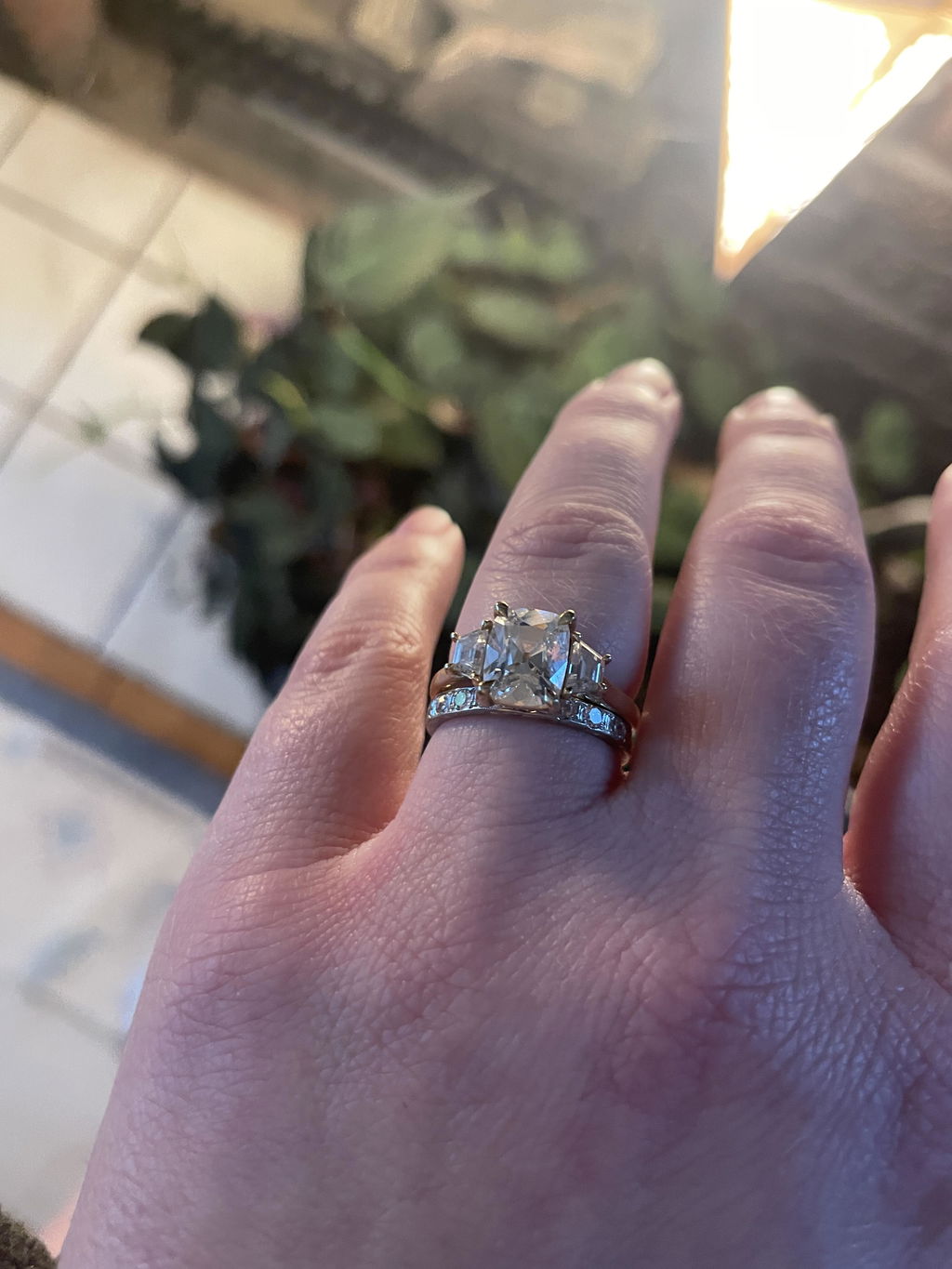
An antique engagement ring is rare for the same reasons a painting is: it was made by hand, by a particular craftsman, at a particular moment, and no second one exists. Its diamond was cut by eye more than a century ago, its mounting was pierced, engraved and set by hand, and it has been treasured for more than a hundred years. This guide explains what makes one ring exceptional and how to look at it the way a collector does.
Why no two antique rings are alike
A modern engagement ring is usually cast from a design that can be made again and again. An antique ring was made once. The jeweler pierced the filigree with a saw, applied the milgrain bead by bead, engraved the shoulders freehand and cut each tiny colored stone to fit its own seat. The diamond at the center was shaped by a cutter working by eye, following the crystal rather than a formula. Even two rings made in the same workshop in the same year differ in a hundred small ways.
A finite treasure
Every antique ring that reaches us has been cherished across generations: worn at weddings and anniversaries, kept safe in family jewelry boxes, handed from one hand to the next. A ring that arrives with its filigree and engraving still crisp has been loved and cared for all that time. And the supply is finite: no one is making more 1910 platinum filigree or hand-cut old European diamonds.
How to judge an antique ring like a collector
1. The diamond's cut
Look for a well-proportioned old cut with life in it: broad, lively flashes and a balanced outline. Two old European cuts of the same size can look completely different, and the better-cut stone is the rarer one. Learn more about old cut diamonds and how old mine and old European cuts differ.
2. The quality of the handwork
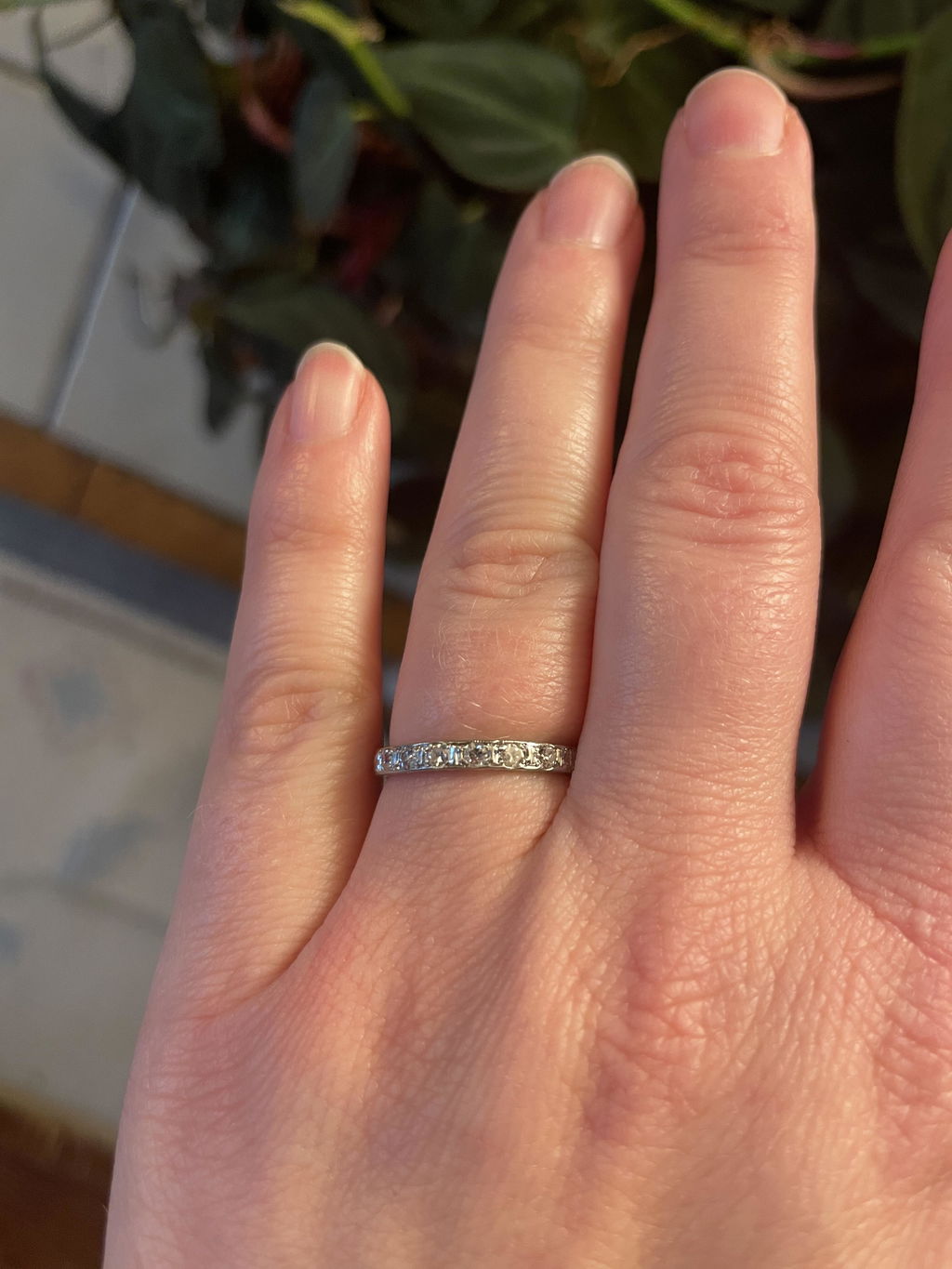
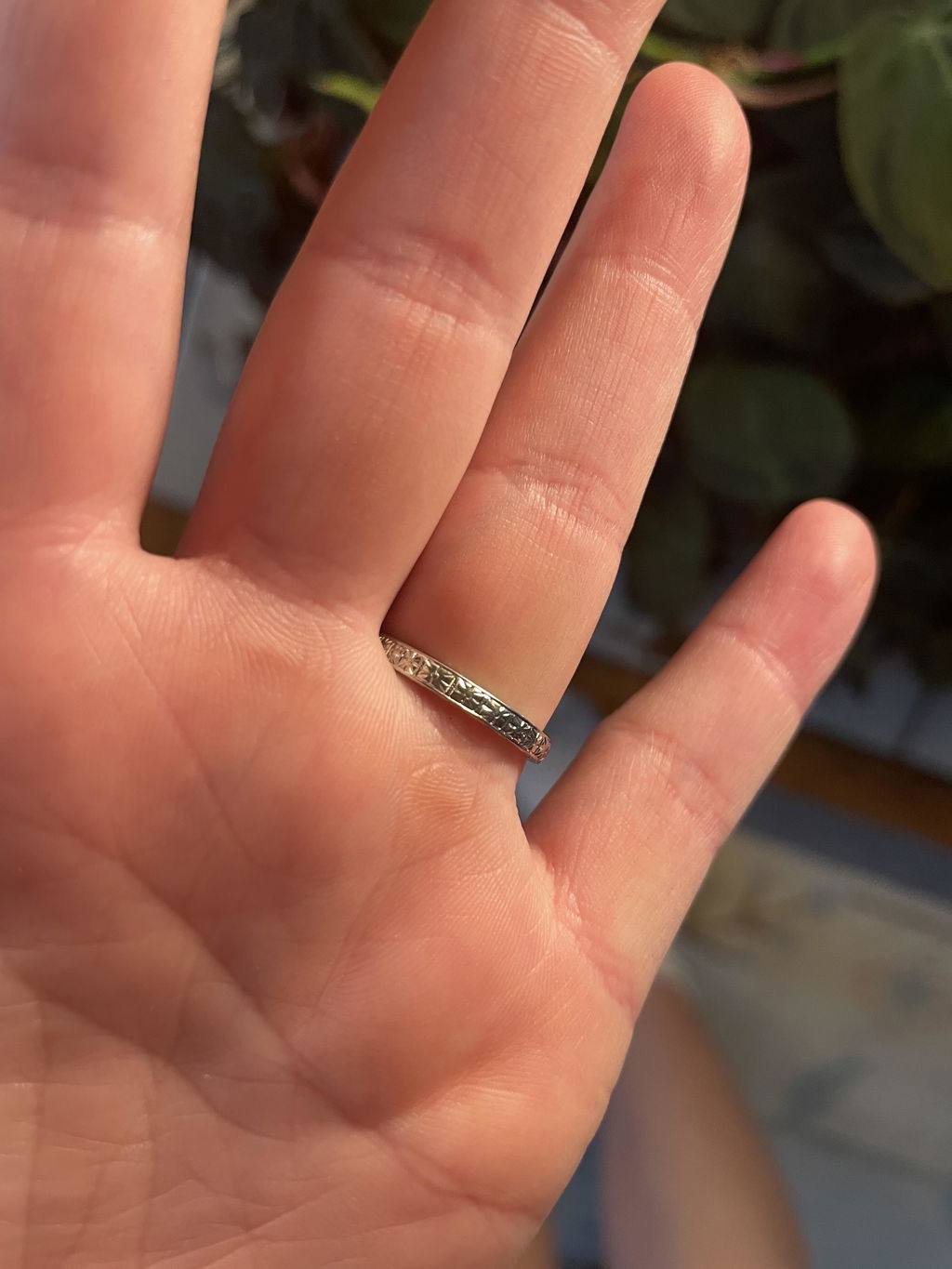
Under a loupe, the best rings reward you: crisp, knife-edged filigree, even milgrain, deep engraving that runs into places no one will ever see, and calibré stones fitted so closely the metal barely shows. The care taken where no one looks is the mark of a master.
3. The design
Some rings are simply better designed than others. Look for a ring that is unmistakably of its era, with proportions that feel right on the hand: an Edwardian mounting as light as lace, an Art Deco ring with confident geometry. Our guide to Edwardian vs. Art Deco jewelry shows what to look for in each.
4. The maker
Signed pieces from great houses such as Cartier, Tiffany and J. E. Caldwell carry their maker's reputation, and a signature that matches the period and quality of the work adds to a ring's importance. See our signed pieces and our guide to signed jewelry houses.
5. Originality
A ring that still holds its original diamond in its original mounting is a special find, a complete survivor exactly as it left the jeweler's bench. A good dealer will share each ring's story.
6. Provenance and inscriptions
Initials and a date engraved inside the band, a maker's mark, a hallmark that dates the piece: these turn a beautiful ring into one with a documented history. They are the antique equivalent of a signature in the corner of a canvas.
7. Condition
Gentle softening from a century of love is part of an antique ring's story. What a collector looks for is a ring ready for its next chapter: secure stones, sound prongs and detail that is still crisp where it matters.
How documentation fits in
A GIA report confirms the diamond's cutting style, color and clarity, and many of our rings carry one. A report is not the ring's whole story, though, any more than a canvas size describes a painting. The cut, the handwork, the maker and the history are what make a piece special.
Questions we hear often
Is an antique engagement ring really one of a kind?
Yes. Even rings of the same design were finished by hand, and a century of history makes each one different. You will not see your ring on anyone else.
How do I know a ring is genuinely antique?
The diamond cut, the metal and hallmarks, and the handwork should all agree. Our guide to identifying an authentic Art Deco ring walks through what we look for.
Can I see the details before I decide?
Yes. We send close-up photos and video of any piece, in natural light, and are happy to walk you through a ring on a video call. You can also visit us by appointment in Great Neck, New York.
See the collection
Every ring in our antique engagement ring collection has its own Why We Love It note explaining what makes that piece special. Explore the Edwardian and Art Deco collections, or tell us what you are drawn to and we will show you the pieces we think you will love.
Written by Shawn Eshaghian, appraiser and co-owner of The Antique Parlour in Great Neck, New York, which he runs with Natasha. He writes and signs The Antique Parlour's certificates of appraisal.